








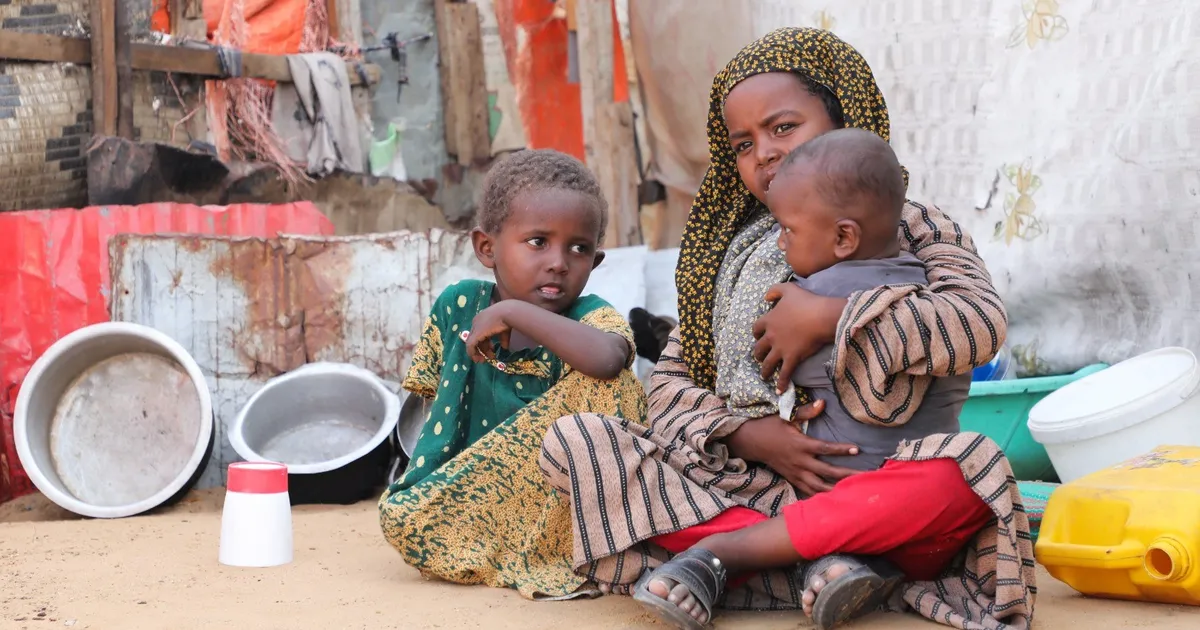
Sustainability and aid are under severe strain in Somalia’s Ladan refugee camp, with mothers struggling to feed their children amidst a global supply chain crisis exacerbated by the war with Iran. Humanitarian organizations face immense challenges in delivering essential goods to the camp, located in Dolo town in southern Somalia. Displaced families, having fled devastating droughts and the loss of livestock after four failed rainy seasons, arrive with little more than their children. The ongoing conflict in the Middle East, thousands of kilometers away, has significantly hampered relief efforts by disrupting supply routes and dramatically increasing fuel costs, impacting organizations like UNICEF.
UNICEF reported having life-saving supplies, including therapeutic food, vaccines, and bedding valued at $15.7 million, either en route or being prepared for shipment to Somalia. However, the fate of these shipments is now uncertain. The agency warns that transportation costs could surge by 30% to 60%, and in some cases, double, alongside potential delays due to rerouting and backlogs. Catherine Russell, UNICEF’s Executive Director, described the war with Iran as a “shock to the operational system” for the organization in Somalia. She stated that while supplies are no longer as easily accessible, and fuel costs have skyrocketed, this presents an additional hurdle. This means more children will suffer the consequences. Compounding these issues, over 400 health and nutrition facilities across Somalia have closed in the past year, primarily due to US funding reductions, leaving many communities without vital support. Aid agencies warn that further closures are likely. These combined challenges have intensified the crisis in Ladan camp, with hunger threatening its inhabitants, especially young children. Russell concluded, “What we are looking at is children who have already reached the brink.”
Somaliland Confronts Famine and Conflict: The Far-Reaching Impact of Global Instability
In Mogadishu, Somalia’s capital, the government issued a stark warning last month: approximately 6.5 million people, out of a population exceeding 20 million, face severe hunger. This precarious situation is aggravated by worsening drought conditions, escalating conflict, and reductions in international aid, intensifying the nation’s ongoing crisis. The humanitarian needs are immense, as the Somali government also battles a protracted war against the al-Shabaab militant group, striving to reclaim territory from these extremists. Latest data from the Integrated Food Security Phase Classification (IPC), a global food security monitoring group, indicates that an estimated 1.84 million children under the age of five in Somalia are projected to suffer from acute malnutrition by 2026.
In Ladan camp, rows of temporary shelters made from plastic sheeting and torn fabrics, propped up by sticks and branches, stretch under the scorching sun. This camp is home to approximately 4,500 families. Shamsuo Noor Hussein, a 20-year-old widow with three children, shared her deepest wish: “All we hope is that our children survive.” Shamsuo fled her village in the Bakool region after losing all her livestock. Her cooking stove in the camp, fashioned from three stones and ash, was cold, showing no signs of recent use. “Since morning, we’ve only had black tea,” Shamsuo told AP from within the camp. At the hospital in Dolo town, mothers sat side-by-side on narrow beds, cradling their emaciated children. Some of these children were too weak to cry, while others emitted faint whimpers. Liban Roble, a nutrition programs coordinator at the hospital, noted that the facility previously received mostly “moderate” cases. “Now, we are seeing children in critical condition; they suffer from severe malnutrition, extreme weakness, and in some cases, their bodies look like skeletal frames,” he added.
Declining Supplies and a Grim Outlook
Roble explained that the hospital’s supplies for treating malnourished children are only sufficient “until mid-April, possibly the end of it.” He warned, “If new supplies do not arrive, more children will deteriorate, and some may die.” At the nutrition center within Ladan camp, health workers weighed children and administered a peanut-based paste, squeezing it directly into their mouths from sachets. Nurse Abdulmajid Adan Hussein described it as a “lifeline, a way to prevent the rapid deterioration of malnourished children.” He added, “Their weakened bodies make them vulnerable to pneumonia, diarrhea, and other illnesses.” Local community leaders report that the existing support is already insufficient. Abdul Fattah Mohamed Osman, deputy head of Ladan organization, stated, “We used to receive assistance from humanitarian agencies, but that stopped in September 2025. Now, the meager support we receive is primarily limited to therapeutic food for malnourished children.”
The arrival of new humanitarian aid and the projected timeline for its delivery remain uncertain, with ongoing geopolitical tensions in the Middle East posing a significant risk to future supply chains and aid effectiveness in Somalia.


